Table of Contents
- Understanding Treatment-Resistant Depression and TMS Therapy Options
- Standard Repetitive TMS (rTMS)
- Deep Transcranial Magnetic Stimulation (Deep TMS)
- Esketamine vs TMS for Depression: Key Differences
- How Long Does TMS Treatment Take
- Does Insurance Cover TMS for Depression
- What to Expect During Your TMS Journey
- Choosing the Right TMS Therapy Option for Your Needs
Last Updated: August 22, 2026
Understanding Treatment-Resistant Depression and TMS Therapy Options
Treatment-resistant depression affects individuals who fail to respond adequately to standard antidepressant medications. When patients exhaust traditional pharmacological approaches, TMS therapy provides a validated clinical alternative.
- Targeting individuals who have tried multiple medication regimens without relief.
- Offering evidence-based care through Solid Foundation Psychiatry in Pearland.
- Establishing new therapeutic pathways for complex psychiatric conditions.
TMS therapy options represent a fundamental shift away from chemical interventions. Instead of introducing systemic drugs, these therapies use magnetic pulses to stimulate specific brain circuits.
- Modulating mood regulation centers via magnetic field stimulation.
- Comparing superficial versus deep anatomical reach protocols.
- Evaluating timing schedules to match individual patient lifestyles.
The most important first step is getting a proper evaluation to confirm that your depression is truly treatment-resistant (typically defined as inadequate response to at least two different antidepressant medications at adequate doses). This distinction matters for which TMS therapy options your insurance may cover.
Standard Repetitive TMS (rTMS)
Standard repetitive TMS, or rTMS, is the most established TMS therapy option available. It delivers focused magnetic pulses directly to the left dorsolateral prefrontal cortex.
- Stimulating key brain regions involved in mood and motivation.
- Shifting dysfunctional neural activity patterns over time.
- Backed by extensive clinical data and decades of research.
Insurance providers maintain clear, established coverage policies for standard rTMS. The FDA cleared the treatment for depression over twenty years ago (the FDA).
- Protocol involves sessions five days a week for four to six weeks.
- Each treatment lasts between 20 and 40 minutes in a comfortable chair.
- Requires no anesthesia, allowing patients to drive home immediately.
Most individuals tolerate the procedure well, though mild side effects can occur. Response rates for treatment-resistant depression consistently average 30 to 40 percent (peer-reviewed research).
- Mild headaches or scalp discomfort during initial sessions.
- Substantial weekly time commitment required for consistent attendance.
- Meaningful symptom improvements often appearing within the first two weeks.
Standard rTMS is the most studied, most insured, and most accessible TMS therapy option. If your insurance covers TMS at all, rTMS is the form most likely to be covered without extensive prior authorization.
Deep Transcranial Magnetic Stimulation (Deep TMS)
Deep TMS utilizes specialized H-coil technology to reach deeper neural structures. This advanced approach extends beyond the surface prefrontal cortex to target internal regions like the anterior cingulate cortex.
- Stimulating deeper subcortical structures involved in emotional regulation.
- Beneficial for patients experiencing severe anxiety or rumination.
- Maintaining a similar weekly schedule to standard rTMS protocols.
Because Deep TMS is newer, insurance approval workflows differ. Patients may encounter stricter prior authorization requirements compared to traditional rTMS.
- Growing recognition among major commercial insurance providers.
- Comparable or enhanced clinical response rates in specialized studies.
- Requires specialized coil positioning during each clinical visit.
Esketamine vs TMS for Depression: Key Differences
When reviewing TMS therapy options, esketamine frequently emerges as a pharmaceutical alternative. Both treatments address treatment-resistant depression through entirely separate mechanisms.
- Esketamine is a nasal spray derived from ketamine compounds.
- TMS relies strictly on non-invasive magnetic field stimulation.
- Both interventions hold official FDA clearance for resistant depression.
The operational timelines and administration environments vary significantly between modalities. Medical monitoring requirements also differ based on the treatment type.
- Esketamine offers rapid action within hours or days (the FDA).
- TMS requires consistent multi-week sessions for cumulative neural shifts.
- Esketamine requires a two-hour clinical observation window after dosing.
Esketamine carries a risk of dissociation and requires careful monitoring for abuse potential, especially in people with substance use history. This requires discussion with your psychiatrist before starting.
How Long Does TMS Treatment Take
Evaluating TMS therapy options requires understanding the acute and maintenance phases. Consistency across the initial treatment schedule is vital for optimal clinical outcomes.
- Acute treatment spans four to six weeks of daily sessions.
- Maintenance protocols may involve periodic weekly booster sessions.
- Cumulative neural stimulation requires patience before noticeable changes occur.
If you’re considering TMS therapy options and worried about the time commitment, ask your clinician about the specific schedule they recommend. Some protocols are slightly more flexible than others, and some clinics can adjust timing to fit your needs.
Does Insurance Cover TMS for Depression
Insurance coverage policies vary considerably across providers and specific health plans. Most major insurers cover standard rTMS when strict medical necessity criteria are met.
- Documentation of prior failed antidepressant medication trials required.
- Prior authorization workflows typically span several business days.
- Out-of-pocket expenses depend on individual deductibles and copays.
Navigating insurance approvals can feel overwhelming for patients. Solid Foundation Psychiatry provides dedicated administrative support to streamline prior authorizations.
- Direct assistance with insurance verification and paperwork submission.
- Transparent cost breakdowns before initiating treatment.
- Guidance on maximizing available medical benefits.
What to Expect During Your TMS Journey
Beginning a TMS treatment course involves a straightforward clinical process. Patients remain fully awake and conscious throughout every session.
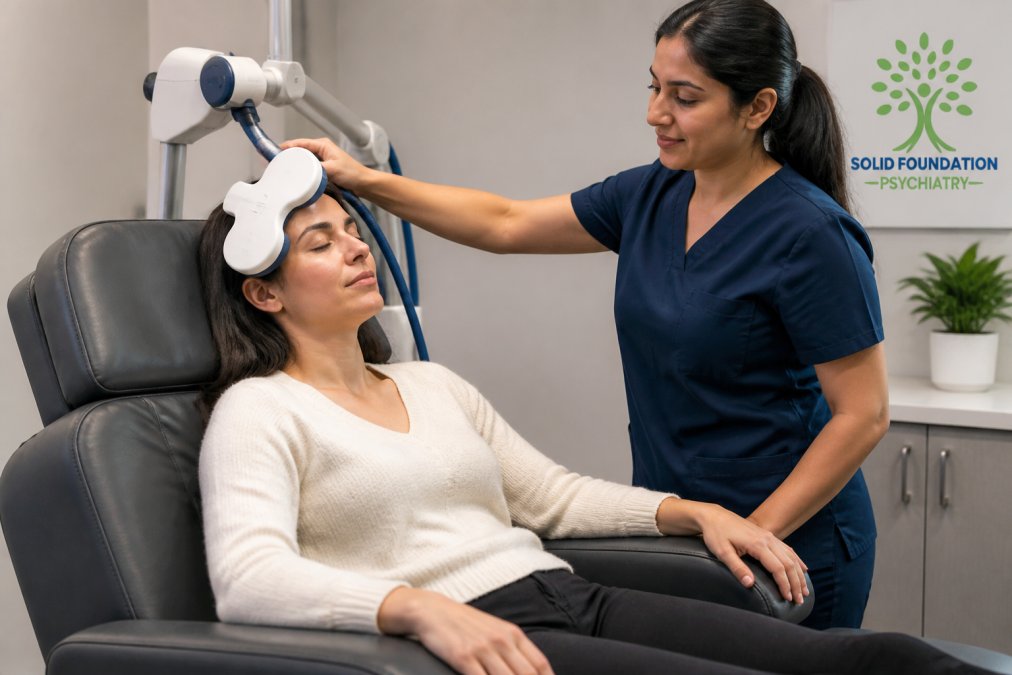
Clinicians determine your unique motor threshold during the initial mapping session. The magnetic coil is then positioned securely against the scalp.
- Rhythmic tapping sensations occur during active pulse delivery.
- Mild temporary headaches or scalp tenderness may occur initially.
- No downtime is required, allowing immediate return to daily routines.
The TMS experience itself is tolerable for most people. The bigger challenge is usually the time commitment and patience required to wait for benefits. If you can manage the schedule and stay consistent, you’re likely to get a fair trial of whether this TMS therapy option will work for you.
Choosing the Right TMS Therapy Option for Your Needs

Selecting an appropriate therapeutic pathway requires a thorough psychiatric consultation. Providers assess previous medication trials and individual symptom profiles to recommend the ideal modality.
- Evaluating personal schedule constraints and insurance coverage.
- Analyzing specific symptom clusters such as anhedonia or severe anxiety.
- Starting with standard rTMS as an accessible, highly researched baseline.
Treatment-resistant depression is challenging, but effective clinical solutions exist. Solid Foundation Psychiatry offers comprehensive psychiatric evaluations and advanced TMS therapy options in Pearland. Book an appointment with our clinical team today to explore personalized mental healthcare.
Frequently Asked Questions
Q: What is considered treatment-resistant depression?
A: Treatment-resistant depression is diagnosed when a person has not responded adequately to at least two different antidepressant medications at therapeutic doses and durations. Some clinicians define it after failed trials with one or more medications. This diagnosis means standard medication approaches alone have not provided sufficient symptom relief, making specialized treatments like TMS therapy options worth exploring with your psychiatrist.
Q: Does insurance cover TMS for depression?
A: Many insurance plans cover TMS therapy for treatment-resistant depression, particularly when documented evidence shows failure of prior medication trials. Coverage varies significantly by plan, state regulations, and whether your condition meets specific medical necessity criteria. Contact your insurance provider directly to verify coverage details, required prior authorization, and any out-of-pocket costs. Your psychiatrist’s office can often help navigate insurance approval.
Q: How long does TMS treatment take?
A: A typical TMS treatment course spans 4 to 6 weeks, with sessions occurring 5 days per week. Each individual session lasts approximately 20 to 40 minutes, depending on the TMS protocol used. Some patients experience improvement within 2 to 3 weeks, while others require the full course. After initial treatment, maintenance sessions may be recommended to sustain benefits.
Q: How does Esketamine differ from TMS for depression?
A: Esketamine is an FDA-approved nasal spray medication derived from ketamine, while TMS uses magnetic pulses to stimulate brain regions involved in mood regulation. Esketamine works through rapid neurochemical changes and typically shows faster symptom relief, often within hours to days. TMS requires multiple sessions over weeks but avoids medication side effects. Your psychiatrist can help determine which approach aligns with your medical history, preferences, and treatment goals.
Q: What are the side effects of TMS therapy?
A: TMS is generally well-tolerated with mild, temporary side effects. The most common are scalp discomfort or mild headache at the stimulation site during or shortly after sessions. Some patients report temporary lightheadedness, twitching, or hearing clicks during treatment. Serious side effects like seizures are rare. Side effects typically diminish as your body adjusts to treatment. Discuss any concerns with your treatment team.
Q: Is TMS therapy effective for everyone with treatment-resistant depression?
A: TMS therapy shows significant effectiveness for many people with treatment-resistant depression, with response rates ranging from 50 to 70% in clinical studies. However, effectiveness varies by individual based on factors like symptom severity, duration of depression, overall health, and treatment protocol used. Not everyone responds equally; some experience substantial improvement while others see modest gains. A consultation with a psychiatrist can help assess whether TMS is likely to benefit your specific situation.
This article was written using GrandRanker