Table of Contents
- What TMS Therapy Actually Feels Like
- Is TMS Therapy Painful? Separating Discomfort From Pain
- Common TMS Therapy Side Effects You Should Know
- What to Expect During TMS Treatment: Your First Session
- TMS Therapy Duration and How It Affects Comfort
- Factors That Change How Much TMS Therapy Hurts
- When to Talk to Your Provider About Discomfort
- Conclusion
- Frequently Asked Questions
Last Updated: September 15, 2026
What TMS Therapy Actually Feels Like
Most people want to know one thing before their first appointment: how to know if TMS therapy is painful. The honest answer is that the sensation is unusual but rarely painful, and it changes significantly after the first week. At Solid Foundation Psychiatry in Pearland, TX, we walk every patient through this before treatment begins, because fear of discomfort is one of the most common reasons people delay care.
TMS (transcranial magnetic stimulation) is a non-invasive treatment that uses magnetic pulses to stimulate underactive regions of the brain. The National Institute of Mental Health overview of brain stimulation therapies describes it as a well-tolerated option for depression that has not responded to medication.
The Tapping Sensation, Explained
The best comparison is a woodpecker tapping on your scalp. Each pulse produces a sharp tapping or clicking feeling, paired with a loud clicking sound. You stay awake the entire time and can read, watch television, or talk.
What surprises most first-timers is the noise, not the sensation. Earplugs are standard.
Is TMS Therapy Painful? Separating Discomfort From Pain
TMS therapy is not typically described as painful. It is described as uncomfortable, and those are different experiences. Patients commonly report a tapping, tingling, or mild tightening sensation at the treatment site.
Discomfort usually peaks in the first few sessions and fades as your scalp adjusts. If you want to know how to know if TMS therapy is painful for you specifically, the answer depends on your pain threshold, the treatment intensity, and how well your care team adjusts the settings.
Common TMS Therapy Side Effects You Should Know
TMS therapy side effects are generally mild and temporary. The U.S. Food and Drug Administration information on TMS devices notes that the most frequently reported effects involve the scalp and head, not the body as a whole.
Scalp Sensations and Headaches
Scalp discomfort at the coil site is the most common complaint. Some patients develop a mild headache afterward, similar to tension headache. Both usually ease within the first two weeks.
Rare Side Effects Worth Understanding
Serious side effects are uncommon. Seizure is the most serious risk, which is why screening matters. Your provider reviews your history, medications, and any conditions that raise seizure risk before clearing you for treatment.
Never hide a history of seizures, head injury, or implanted medical devices during screening. These details determine whether TMS is safe for you, and withholding them is the one mistake that can turn a low-risk treatment into a dangerous one.
What to Expect During TMS Treatment: Your First Session
Your first session is longer than the rest because it includes mapping and dose calibration. A clinician positions the coil over your scalp and delivers pulses to find the correct spot and intensity, then you settle into the treatment rhythm.
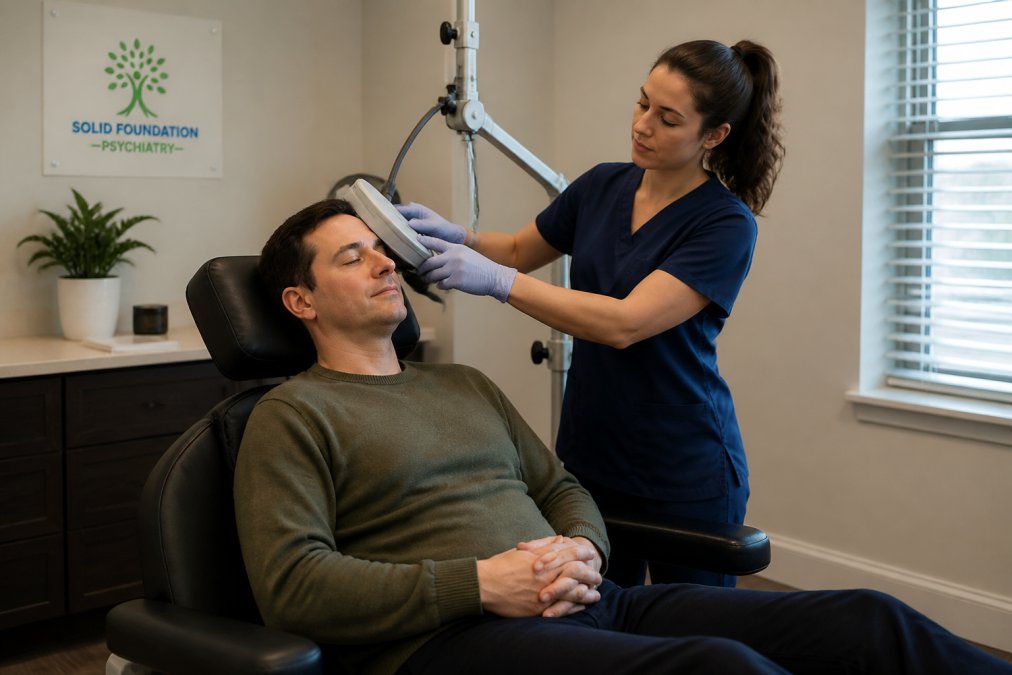
You will feel each pulse as a tap and hear a loud click. Sessions typically run 20 to 40 minutes, five days a week. There is no anesthesia and no recovery period, so most people drive themselves home and return to work. While this non-invasive approach offers a clear path for many, exploring other alternative depression treatments can help ensure you find the most effective strategy for your specific clinical needs.
TMS Therapy Duration and How It Affects Comfort
TMS therapy duration for a standard course is usually several weeks of daily sessions. Comfort improves as treatment continues, which is why the first week is the hardest.
The relationship is straightforward: the longer you stay with it, the less you notice each pulse. Many patients describe the sensation as background noise by the second or third week. If your schedule makes daily visits difficult, ask about appointment times before you start. In the Pearland and Houston area, working professionals often need early morning or evening slots to make a full course realistic.
Factors That Change How Much TMS Therapy Hurts
Three variables shape your comfort more than anything else: your individual pain sensitivity, the stimulation intensity, and the coil’s position on your scalp.
Intensity is the biggest lever. Higher intensity reaches deeper brain regions, but it also produces stronger scalp sensations. Your provider balances effectiveness against tolerability, and that balance is different for every patient.
How Your Care Team Can Adjust Treatment
A good care team treats discomfort as a dial, not a fixed setting. Adjustments include repositioning the coil, lowering intensity slightly, changing the pulse pattern, or pacing the session differently.
Ask your provider to note your comfort level at each session. Tracking it over the first two weeks gives them real data to adjust against, rather than relying on how you happen to feel on a given day.
When to Talk to Your Provider About Discomfort
Speak up the same day if you feel sharp pain rather than tapping, if a headache lasts more than a few hours, or if scalp soreness makes brushing your hair difficult. These are signals to adjust, not endure.
The table below summarizes what patients commonly feel and when to raise it.
| What You Feel | Normal? | What to Do |
|---|---|---|
| Tapping or clicking at the coil site | Yes | Continue; it eases over 1-2 weeks |
| Mild headache after a session | Yes | Hydrate, rest; mention it at your next visit |
| Scalp tenderness between sessions | Often | Tell your provider; intensity may be lowered |
| Sharp or shooting pain | No | Stop and contact your provider same day |
| Any seizure-like symptoms | No | Seek emergency care immediately |
A common mistake is staying quiet because you assume discomfort is part of the deal. It is not. Treatment settings are adjustable, and the patients who report discomfort early tend to complete their full course.
Conclusion
Wondering how to know if TMS therapy is painful is a reasonable worry, and the answer is that most people feel tapping and pressure rather than pain. If you are in Pearland or the greater Houston area and weighing TMS or Esketamine for treatment-resistant depression, Solid Foundation Psychiatry offers personalized treatment plans, a collaborative care team, and a non-judgmental approach from your very first visit. You can read more about transcranial magnetic stimulation from the Mayo Clinic before you come in, and our staff will answer every question you bring.
Frequently Asked Questions
What does TMS therapy feel like during a session?
Most people describe a tapping or knocking sensation on the scalp, similar to a woodpecker lightly drumming against the head. Some feel a brief tingling or muscle twitch near the treatment area. The sensation is noticeable but typically not sharp or stabbing. Many patients read, watch TV, or listen to music during the session. If the tapping becomes uncomfortable, your clinician can adjust the coil position or intensity to make it more tolerable.
Is TMS therapy considered painful by most patients?
Clinical experience suggests most patients describe TMS as mildly uncomfortable rather than painful, especially during the first week. The scalp may feel sensitive or sore as your head adjusts to the tapping. Discomfort usually decreases after the first few sessions. If you experience significant pain, tell your provider. Adjustments to coil placement, intensity, or session pacing often resolve the issue without stopping treatment.
What are the most common side effects of TMS therapy?
The most frequently reported TMS therapy side effects are scalp discomfort, mild headache, and tingling or twitching near the treatment site. These typically ease within the first week or two. Serious side effects like seizures are rare. Unlike electroconvulsive therapy, TMS does not require anesthesia and does not cause memory loss. Your care team will review your health history to confirm TMS is appropriate for you.
How long does the tapping sensation last during TMS?
The tapping sensation happens only while the magnetic pulses are active, which is during the treatment itself. A standard TMS session lasts about 20 to 40 minutes, depending on the protocol. The tapping is not continuous; it comes in short bursts with pauses between them. Once the session ends, the sensation stops immediately. Any lingering scalp tenderness usually fades within an hour or so after treatment.
Discomfort during treatment is manageable when your care team listens and adjusts. Solid Foundation Psychiatry builds personalized treatment plans, coordinates care across therapy and medication management, and offers specialized TMS and Esketamine services in a supportive setting. Book an appointment with Solid Foundation Psychiatry and take the next step toward steadier, more balanced days.